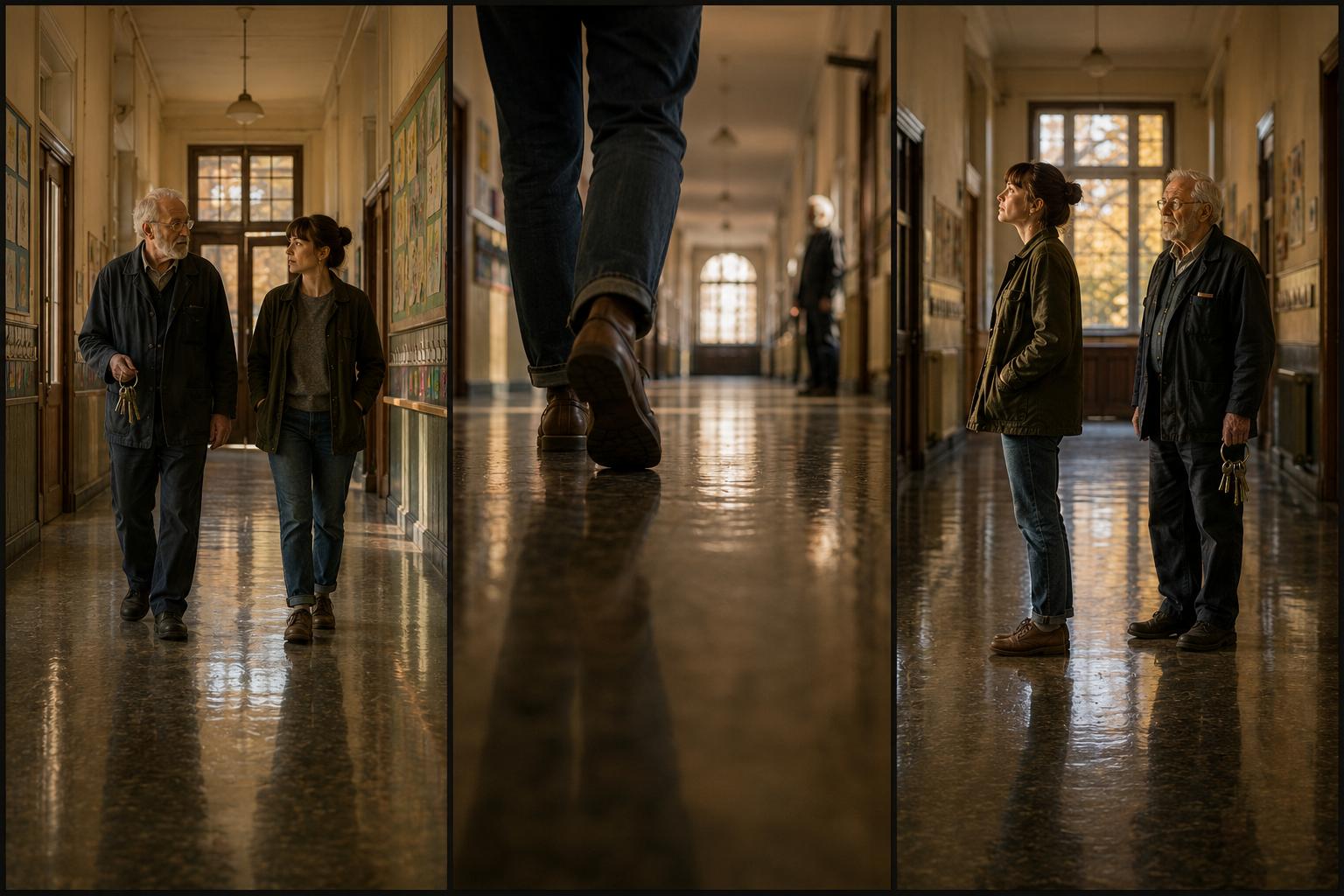
Nora and Mr. Vale walked down the long corridor toward the archive room.
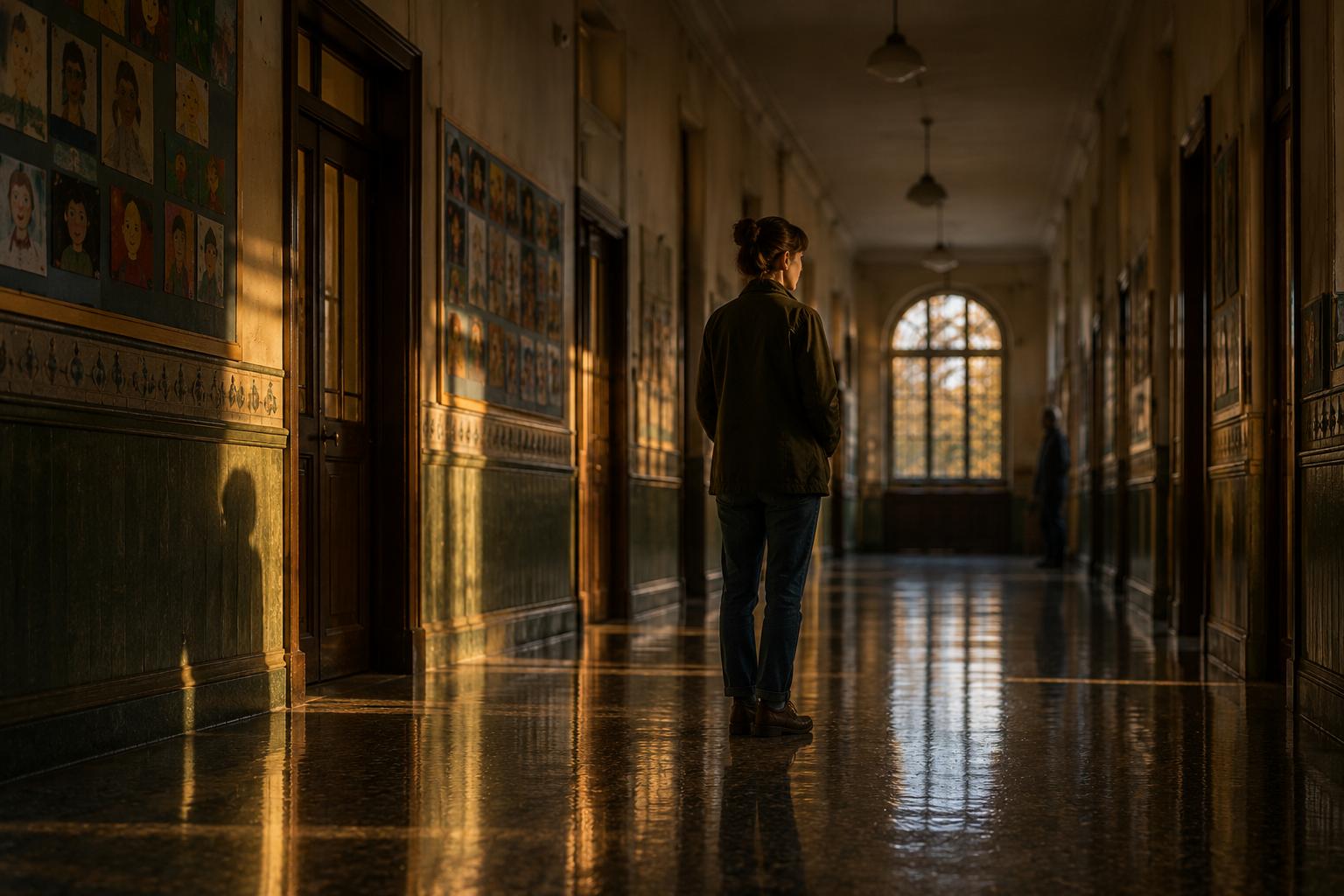
The floor had the same dull shine she remembered. The walls were still divided into cream above and green below. Display boards ran along both sides, filled now with newer drawings, newer handwriting, newer children whose names meant nothing to her.
Yet the corridor felt familiar.
That was why her footsteps troubled her.
They sounded too loud.
Too slow.
Too adult.
As a child, Nora remembered this place as noise: shoes squeaking, coats brushing walls, someone calling across the hall, teachers reminding everyone not to run. The corridor had never belonged to one pair of footsteps then. It had been a river of many small movements.
Now each step she took seemed to arrive alone.
Mr. Vale walked beside her with his keys in one hand. They jingled softly, steady and light.
“Still the same floor,” he said. “Polished every Friday. Complained about every Monday.”
Nora smiled. “By the children?”
“By the staff. Children only complained if they fell over dramatically.”
She laughed once, quietly.
The laugh disappeared quickly into the corridor.
They passed a patch on the wall where a trophy case used to be. Mr. Vale pointed at it.
“Football cups there. Mostly dust, if we’re being honest.”
Nora looked at the pale rectangle. “I remember something being there.”
“That counts.”
“Does it?”
“At this age, remembering the shape of a thing is sometimes the best anyone can do.”
They continued walking.
Nora listened again to her own steps. The sound seemed to come from someone else’s body. A woman’s shoes on an old school floor. Measured. Careful. Not the quick, uneven steps of the child who once hurried here with a book bag knocking against her side.
The corridor had not become strange.
She had.
At the far end, autumn light rested against the window. The glass reflected both of them faintly: Mr. Vale with his keys, Nora with her coat and careful posture, walking through a place where her younger self had once moved without thinking.
She slowed.
Mr. Vale slowed too, but did not ask why.
For a moment, Nora imagined the old noise returning: children rushing past, doors opening, someone laughing too loudly, someone being told to walk. Then the imagined sound thinned until only her own last step remained.
She stopped.
The silence after it felt like another kind of echo.
Mr. Vale’s keys settled in his hand.
“Funny thing, corridors,” he said. “They always sound different when they’re waiting.”
Nora looked down at the polished floor.
Maybe that was it.
Maybe her footsteps sounded different because the corridor was not only holding distance. It was holding years.
She took one more step, slower this time.
The sound did not become familiar.
But it became hers.