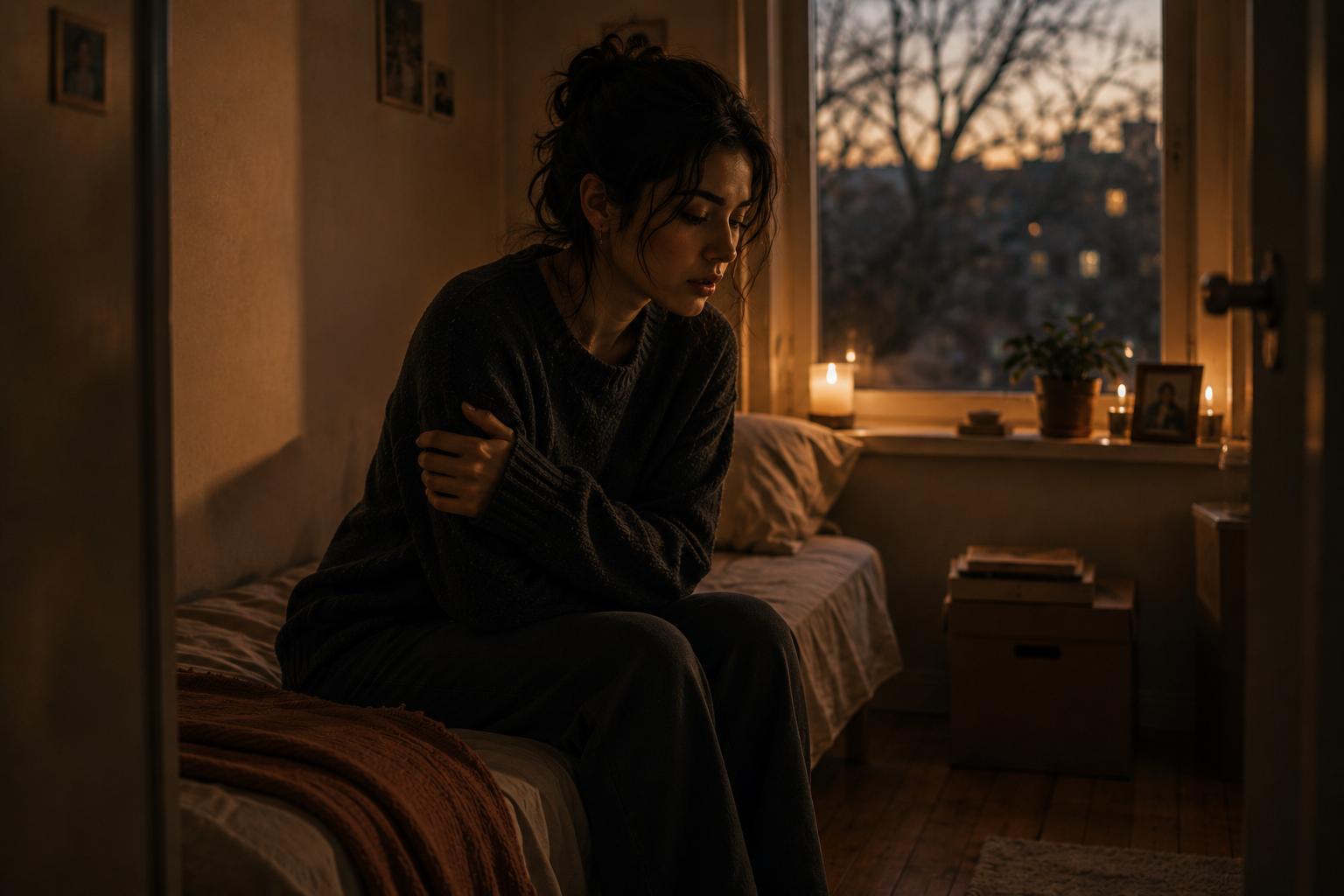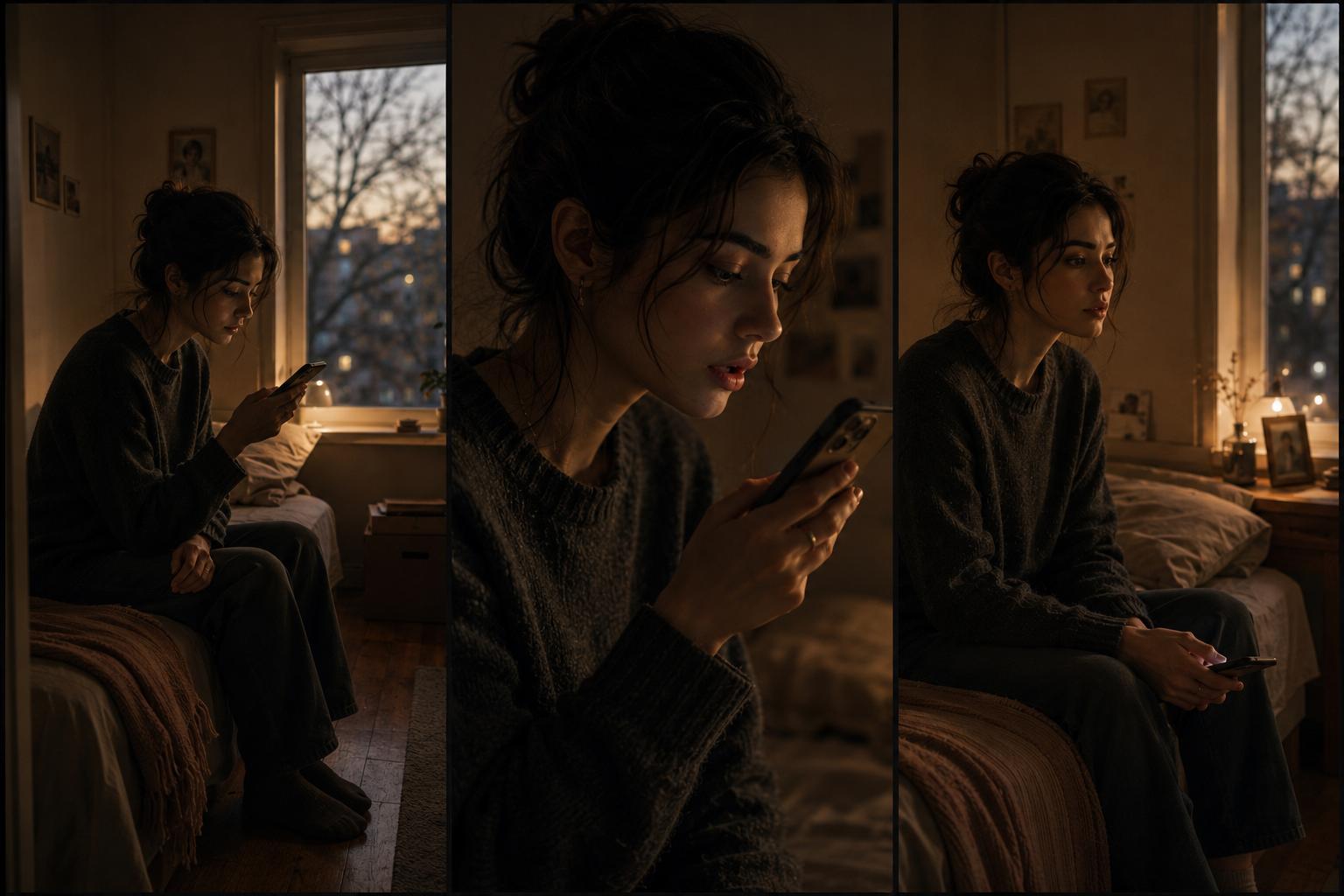
Inside the spare room, Sera sat on the edge of the narrow bed.
The room smelled faintly of folded fabric, old paper, and the lavender drawer sachets her mother used to buy in pairs. A blanket lay across the foot of the bed. Beneath the window, a cardboard box held things no one had decided what to do with.
Her phone was in her hand again.
Still no reply.
Sera unlocked the screen and read the message.
I know we stopped talking properly after Mum got ill. I think I was afraid. I miss you more than I know how to say.
Her eyes stopped on the middle sentence.
I think I was afraid.
She whispered it once.
Then again.
“I was afraid.”
The words sounded different in the room.
She said them more quietly.
“I was afraid.”
After a while, the phrase began to loosen. It no longer felt like a confession. It no longer felt like an explanation. It became sound first, then breath, then something small and exposed.
Afraid.
The word seemed too simple.
Had she been afraid?
Yes.
But also angry. Tired. Jealous of Adrian’s steadiness. Ashamed of how quickly she left the room when their mother needed more than she knew how to give.
She remembered Adrian standing by the bed years ago, holding a glass of water. His sleeves were rolled up. His face looked older than it should have. Sera had hated him for seeming capable. Then she had hated herself for needing him to be.
“I was afraid,” she said again.
This time, the words did not try to explain everything.
They only stood there.
Small.
True.
Incomplete.
Sera lowered the phone into her lap.
A sentence repeated too many times can stop sounding like language and start sounding like feeling.
She looked at the folded blanket, the box beneath the window, the quiet shape of the room.
For the first time that evening, she did not ask whether the message was enough.
It was not enough.
But it was honest.
And perhaps honesty did not have to carry the whole past at once.